Correlation Analysis
Association and Correlation in Data Mining are two of the most widely used techniques. They are used to identify patterns and relationships between variables in a dataset.
Association refers to the discovery of co-occurrences or relationships between items in a dataset. On the other hand, correlation measures the strength of the relationship between two variables (attributes).
Correlation Analysis is a data mining technique used to identify the degree of relationships i.e. in which two or more variables are related or associated with each other.
Correlation
Correlation refers to the statistical relationship between two or more variables, where the variation in one variable is associated with the variation in another variable.
In other words, it measures how changes in one variable are related to changes in another variable. Correlation can be positive, negative, or zero, depending on the direction and strength of the relationship between the variables.
Positive correlation
A positive correlation is a relationship between two variables in which both variables move in the same direction. That is, one variable increases as the other variable increases, or one variable decreases while the other decreases.
An example of a positive correlation would be height and weight. Taller people tend to be heavier.
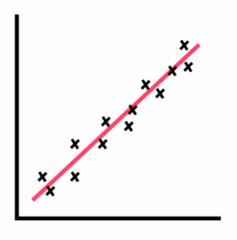
Positive correlation
Negative correlation
A negative correlation is a relationship between two variables in which an increase in one variable is associated with a decrease in the other.
An example of a negative correlation would be the height above sea level and the temperature. As you climb the mountain (increase in height), it gets colder (decrease in temperature).
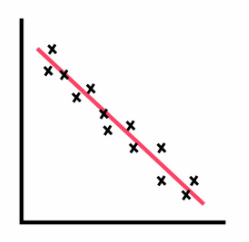
Negative correlation
Zero correlation
A zero correlation exists when there is no relationship between two variables. For example, there is no relationship between the amount of tea drunk and the level of intelligence.
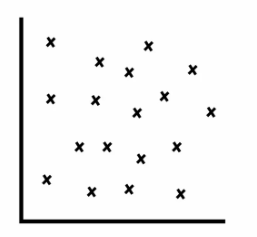
Zero correlation