Graph Pattern Mining
Graph pattern mining is a process in which the mining techniques are used in finding a pattern or relationship in the given real-world collection of graphs. By mining the graph, frequent substructures and relationships can be identified which helps in clustering the graph sets, finding a relationship between graph sets, or discriminating or characterizing graphs.
Graph Pattern Mining − It is the mining of frequent subgraphs in one or a set of graphs.
There are two steps in finding frequent subgraphs.
- The first step is to create frequent substructure candidates.
- The second step is to find the support of each and every candidate.
There are various approaches for mining graph patterns can be categorized into Apriori-based and pattern growth–based approaches.
The Apriori-based approach: The approach to find the frequent graphs begin from the graph with a small size. The approach advances in a bottom-up way by creating candidates with extra vertex or edge. This algorithm is called an Apriori Graph.
The Pattern-growth approach: This pattern-growth approach can use both BFS and DFS (Depth First Search). DFS is preferred for this approach due to its less memory consumption nature.
Example:
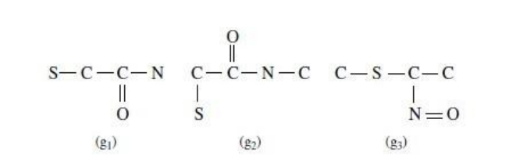
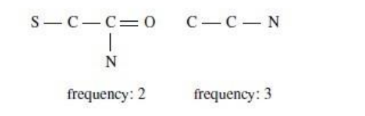
From the above given graphs, the following are frequent subgraphs with frequency 2 and 3.